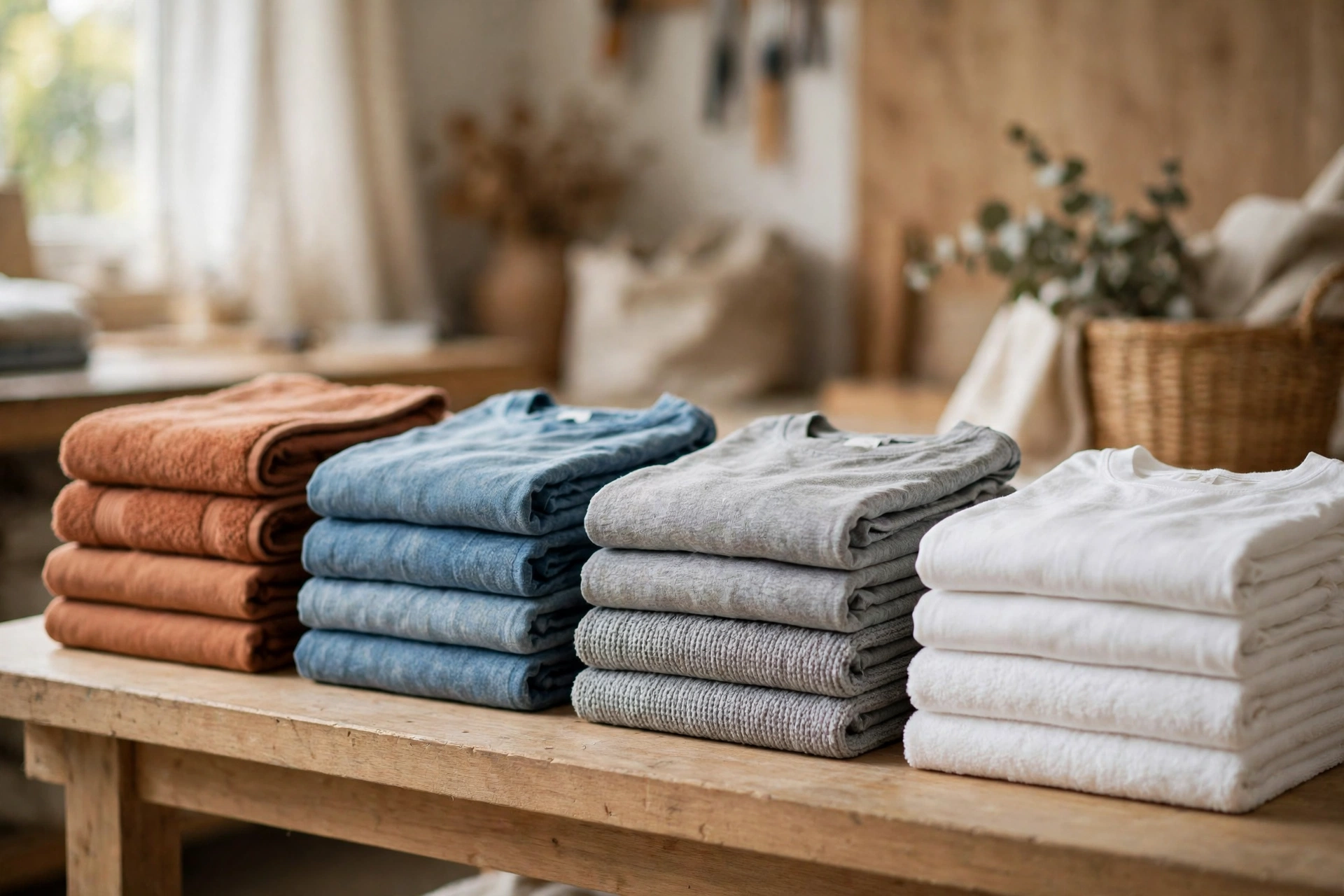
I'm a young local entrepreneur building a small shop-rag business out of recycled cotton. The shirts and towels too worn for anyone to wear again are exactly what I start with — I wash them, cut them, sort them, and turn them into rags that go to work in local shops.
Right now I need the cotton, not customers. If you've got a bag of it headed for the trash, I'd rather turn it into rags.
FreeDonations cost you nothing and keep cotton out of the trash.
Clean & dryThat's the whole standard. Holes, rips, and faded are fine.
Local & smallSmall batches, sorted by hand — not a pallet shipped across the country.
What I take — the good stuff
Cotton is the whole game: it soaks up oil and water, holds together when it's wet, and worn cotton is already broken in — which makes it more absorbent, not less. If it's cotton and it's clean and dry, it probably belongs here.
1
Yes please
Cotton t-shirts — any color
The classic shop rag. Torn, stained, stretched out, logo from a fun-run ten years ago — none of that matters once it's cut. White shirts are the most useful of all (no color to transfer), but every color gets used.
2
Yes please
Bath towels & hand towels
Terry cotton is the heavy lifter — thick loops soak up oil and big spills better than anything else. Frayed edges, thin spots, and bleach marks are all fine. Retired gym, shop, and kitchen towels count too.
3
Yes please
Cotton sheets & pillowcases
Flat cotton cuts into big, even rags — the kind shops reach for on larger jobs. Worn thin is fine. Fitted sheets work too; the elastic corner just gets trimmed off in cutting.
4
Yes please
Flannel shirts & cotton sweatshirts
Flannel is soft, tough, and very absorbent — great wiping cloth. Cotton sweatshirts and hoodies cut into heavier rags for greasy work. Zippers and buttons aren't a problem; they come off before cutting.
5
Yes please
Washcloths & retired cotton towels of any kind
Small pieces still earn their keep — washcloths, bar towels, and worn cotton cleaning cloths get sorted into the mix. A grocery bag of small stuff is a real contribution, not a bother.
What I can't take — and why
A short list, and every item on it has a real reason. Keeping these out is what keeps a whole batch usable.
6
Can't take
Anything wet, moldy, or musty
This is the one hard rule in the rag trade: damp cotton spoils everything it's packed with. If it's been sitting wet in a bag or smells of mildew, it has to be trash — for me and for the thrift store too. Clean and dry is the standard.
7
Can't take
Oil-, chemical-, or paint-soaked cloth
Cotton that already did its last job in a shop — soaked in motor oil, solvents, or hardened paint — can't be washed back into service safely. Same for anything contaminated in a way a normal wash can't fix.
8
Can't take
Mostly-synthetic fabric
Polyester, nylon, microfiber, and stretch blends don't soak up oil and water the way cotton does — that's why shops ask for cotton. A shirt with a little spandex in it is fine; a bag of athletic synthetics isn't rag material.
9
Can't take
Not-cloth stuff
Rugs, pillows and stuffing, mattresses, shoes, and clothing you could still actually wear. If it's wearable, donate it to a thrift store where it does the most good — this page exists for the cotton that's past wearing.
How a donation becomes a rag
Four steps, all by hand, in small batches.
1 · Bag it
You gather clean, dry cotton — a grocery bag or a trash bag, either works — and email me.
2 · Hand it over
We arrange a simple handoff by email. No forms, no accounts, no drop-off line.
3 · Wash, strip, cut
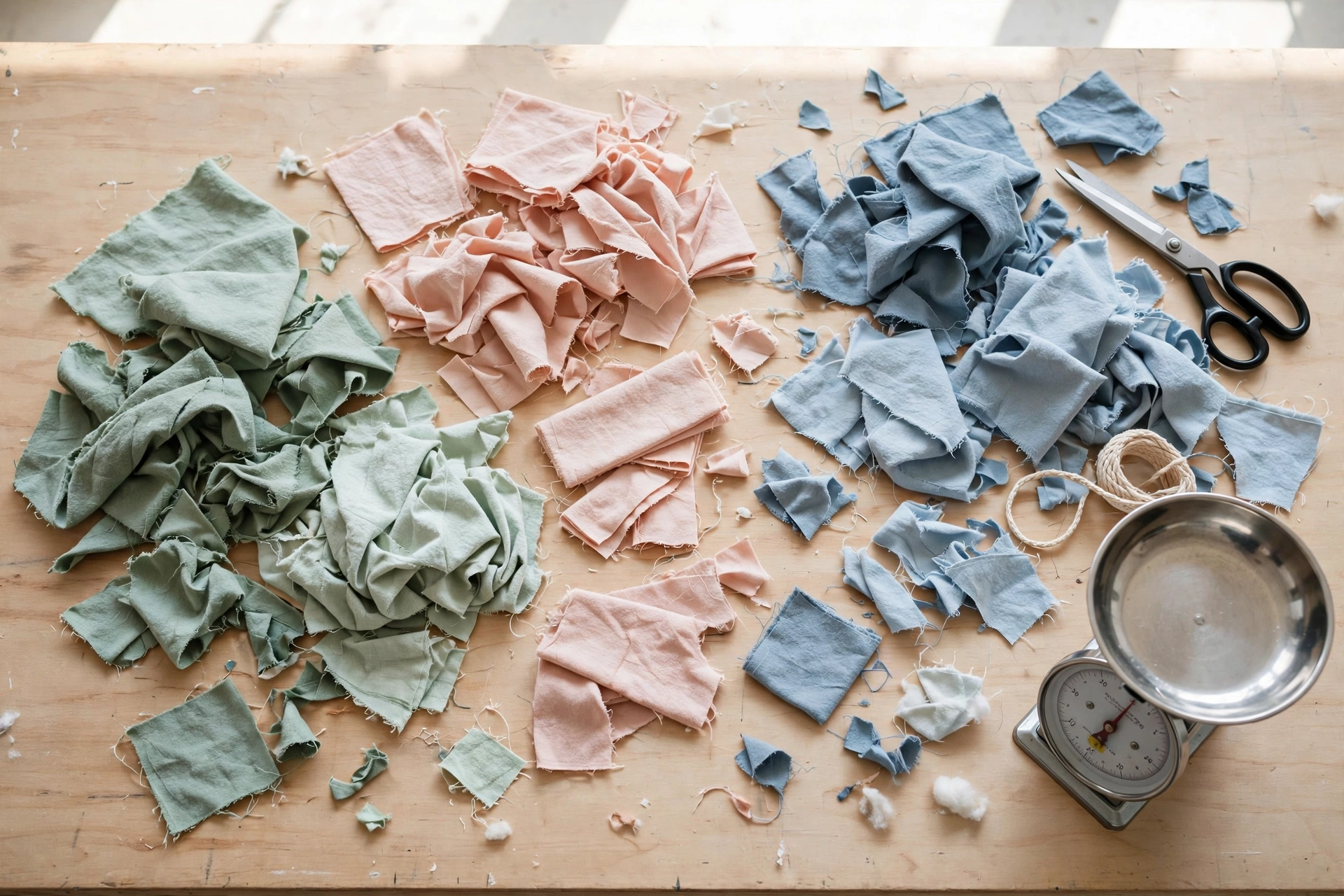
Everything is washed, buttons and zippers come off, and the cotton is cut into rag-sized pieces.
4 · Sort & bundle
Rags are sorted — white separate from color, terry separate from knit — and bundled by weight for local shops.
Sorting and cutting, one small batch at a time.
Fair questions
Why not just throw worn-out shirts away?
Because worn cotton isn't worn out. Most donated clothing never gets resold — thrift stores sell only a small share of what comes in, and the rest is bundled and shipped off by the pound. Cotton kept local skips all of that: it becomes a tool a shop uses every day, a few miles from the closet it came out of.
Does it need to be washed first?
Just normally clean and completely dry — no special prep, no folding, no sorting. Everything gets washed again here before it's cut.
How much is worth donating?
Any amount. One bag at a time is exactly how a small operation like this one is built.
Do you pay for cotton?
Not at this stage — this runs on donations, and that's what keeps the rags affordable for the small shops that will use them. What you get is a closet cleaned out and cotton that goes back to work instead of into the ground.
Who runs this?
A young local entrepreneur, through KJH Enterprises — a small headquarters for small ventures, built one page and one project at a time. The only contact is the business email below.
Got a bag of old cotton?
Shirts, towels, sheets — clean, dry, and past wearing. That's the whole checklist. Send an email and we'll arrange the handoff.